A Panchakarma diploma can mean supervised clinical preparation at one institute and little more than massage instruction at another. You will be able to identify what practical training should look like, judge safety and recognition, and compare a course with the role or further study you actually want.
Key takeaways
- Expect observation, skill practice, and supervised procedures before independent work.
- Confirm which therapies the course teaches and where student practice stops.
- Ask how workload, entry rules, attendance, and competency checks are documented.
- Compare institute supervision, clinical exposure, and career outcomes before enrolling.
What Happens During Practical Training
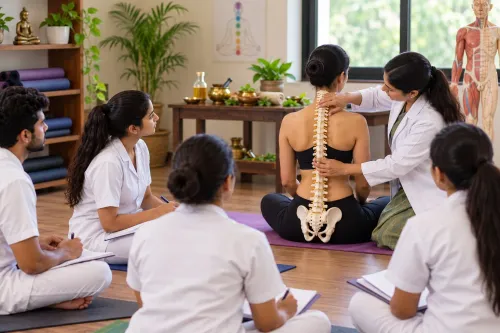
Practical training moves from observation to supervised performance, not straight from a demonstration to independent treatment. You first watch an instructor explain the treatment sequence, practise individual skills, and then complete the procedure under direct supervision.
1. Begin with patient intake, medical and Ayurvedic history-taking, assessment, contraindication checks and informed consent. Protect privacy through patient positioning and draping before preparing the room, equipment, oil and linen.
2. During treatment-room preparation, select an oil for its intended use, check its temperature, position the patient safely and confirm comfort. Maintain hand hygiene, control pressure and timing, communicate throughout the treatment, and recognise discomfort.
3. Perform the procedure while the instructor watches. Beginners may press too hard, overheat oil, lose track of timing or omit consent; the instructor should correct each error immediately and record the feedback.
4. Finish by cleaning and disinfecting equipment, handling linen safely, documenting the procedure and arranging follow-up. Discuss aftercare, observation for adverse effects and, where relevant, samsarjana or a recovery diet.
5. Continue through supervised clinical attendance, case logs and signed competency checklists. A credible course records observed and assisted cases, not merely demonstrations of Abhyanga or Swedana, and includes post-treatment care alongside practical training.
Which Therapies You Practise—and Where Safety Limits Begin
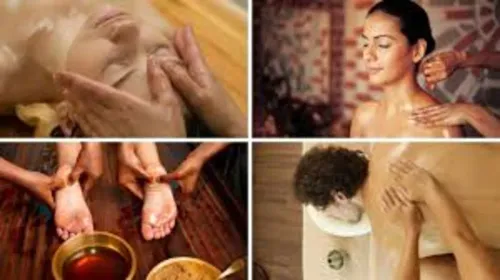
Watching a procedure does not make you competent or authorised to perform it. Abhyanga, Shirodhara and Swedana are external procedures that students may practise under supervision; Basti, Nasya, Vamana and Virechana demand tighter clinical oversight.
| Therapy | What training should establish | Typical boundary |
|---|---|---|
| Abhyanga, Shirodhara, Swedana | Technique, temperature, pressure, timing and patient comfort | Hands-on practice with an instructor |
| Basti | Material, equipment, positioning, hygiene, administration, observation and complications | Assisted or demonstration-only until signed off |
| Nasya | Suitability, dose, positioning, administration and adverse reactions | Direct clinical supervision |
| Vamana and Virechana | Patient selection, hydration, medicines, monitoring and stop or referral criteria | Qualified practitioner-led care |
| Raktamokshana | The classical procedure’s risks, exclusions and legal limits | Demonstration or specialist oversight |
The classical five are Vamana, Virechana, Basti, Nasya and Raktamokshana. Abhyanga and Shirodhara are not substitutes for them, despite broader spa use of the word Panchakarma. A credible course names hands-on and demonstration-only procedures, the supervisor’s responsibilities, and the minimum observed or assisted cases recorded in a logbook.
Vamana involves induced vomiting; Virechana involves purgation. Students need explicit stop rules for fainting, breathing difficulty, persistent vomiting, severe pain, bleeding, confusion, allergic reaction, burns or dehydration, followed by referral to a qualified clinician. Pregnancy, childhood, frailty, serious illness and complex medicines require practitioner oversight. “Detoxification” is not a promise of health benefit.
The Workload, Entry Rules and Competency Checks
Do not assume a diploma has standard entry rules: confirm the institute’s eligibility requirements before paying. Ask whether it requires school completion, science subjects, Biology, a minimum age or previous healthcare experience. “Diploma” is not a universal qualification.
- Request the written admission rules and awarding body.
- Ask how many clinical hours, attendance days and supervised cases are compulsory.
- Confirm whether students handle patients with different body types and health histories.
- Ask what happens after a failed practical and whether an instructor signs each case.
Training is physically demanding. Expect long periods of standing, lifting or positioning patients, handling oils and equipment, protecting privacy and staying calm when someone reports discomfort. Outside class, budget time for Ayurvedic terminology, massage practice, case records, clinical attendance and cleaning routines.
Assessment can include written theory papers, written examination and viva, attendance records, demonstrations, practical competency assessment, case records and checklists. Confirm that feedback is documented. The syllabus should cover vital signs, fainting, dehydration and electrolyte disturbance, aspiration, allergic reactions, burns, mucosal injury and cross-infection, plus first-aid referral pathways.
Students should recognise emergencies, not manage serious complications alone.
How a Panchakarma Diploma Compares With Other Routes
A Panchakarma diploma usually prepares you for supervised technician or assistant work, not independent Ayurvedic practice. Its duration, clinical hours, examinations and legal standing vary by institute, so the word “diploma” does not define the qualification.
| Route | Main preparation | Realistic outcome |
|---|---|---|
| Panchakarma diploma | External therapies, equipment, records and supervised clinical support | Assist a registered Ayurvedic practitioner; provide permitted therapies under supervision |
| Massage-technician course | Massage technique, draping and client handling | Build dexterity in external therapies, without necessarily learning patient selection or medically significant procedures |
| Ayurveda degree | Broader Ayurvedic medicine, biomedical subjects and clinical training | Practitioner responsibilities only when the qualification also meets applicable requirements for registration |
A diploma graduate may prepare oils and equipment, maintain case records, provide aftercare and perform authorised external procedures under supervision. The diploma does not automatically authorise diagnosis, prescribing, treatment planning, complex independent Panchakarma, bloodletting, injections, laboratory testing or emergency care.
Before enrolling, verify the awarding body, affiliation, examination authority, sample certificate and written course regulations. Check the qualification’s position under the applicable Maharashtra framework, including NCISM recognition and registration requirements.
Ask which roles graduates may legally hold, which procedures require a registered supervisor and whether employers accept the certificate. Treat claims that “diploma” equals practitioner registration as a warning sign, not proof of professional standing.
How to Compare Institutes Before You Enrol
Request these records before paying, because a course title cannot prove clinical exposure or work readiness. Use this institute comparison checklist for providers in Nagpur or elsewhere:
- Full syllabus, total classroom and clinical hours, practical-to-theory ratio, number of supervised cases, clinical-site address and treatment-clinic access.
- Student-to-instructor ratio, equipment list, cleaning and infection-control procedures, named clinical supervisor, instructor qualifications and registration.
- Patient-consent forms, case documentation, procedure logbook, assessment checklists, feedback records and adverse-event records.
- Internship and placement support, re-examination rules, refund terms, sample certificate and a written statement of permitted graduate duties.
Compare the training setting, not just the brochure.
| Setting | What you can assess | Main limitation |
|---|---|---|
| Hospital or supervised Ayurvedic clinical unit | Comorbidities, medicines, consent, privacy, referrals and follow-up | Confirm supervised hours and case records |
| Classroom with treatment clinic | Demonstrations, equipment handling and basic procedures | Patient complexity may be limited |
| Salon or wellness centre alone | Massage-room routine and dexterity | Little preparation for assessment, referral or medically significant procedures |
Check whether instructors hold relevant qualifications and registration. Treatment photographs and words such as “advanced” do not establish competence. Ask to see evidence of clinical hours and signed assessment records.
If comparing Chakrapani Panchakarma Yoga Nisargopchar College with another provider, ask both institutes identical questions. Compare their written answers, named supervisors and documented cases, then judge the internship and placement support rather than counting massage or steam demonstrations.
Related products
 | Diploma in Panchakarma Course Overview: The Panchakarma Diploma Course is designed to equip students with a deep understanding of Panchakarma principles, therapies, and... View product → |
 | Diploma in Panchakarma and Message Technician Diploma in Panchakarma and Message Technician A Diploma in Panchakarma and Massage Therapy, often referred to as a Panchakarma and Massage Technician course, equips individuals with the knowledge... View product → |
Choosing the Right Outcome for Your Career Plan
A diploma is a sensible match for therapist work, an assistant role under a registered practitioner, or preparation for degree-level Ayurveda education when supervision and role boundaries are documented. It is a weaker fit for personal-interest wellness knowledge if attendance includes extensive clinical training.
| Goal | Evidence to compare | Likely fit |
|---|---|---|
| Therapist or assistant role | Permitted procedures, supervisor, case logbook | Diploma |
| Diagnosis and prescribing | Recognised qualification and registration | Degree-level Ayurveda education |
| Personal interest | Attendance rules and time commitment | Shorter certificate |
Before paying, define your career scope: the role, procedures, accepted supervision and recognition an employer or regulator requires. Compare these with written regulations, the clinical logbook and placement arrangements. Reject guarantees of weight loss, disease cures or universal toxin removal; individual assessment and qualified oversight remain central to Panchakarma practice.
Frequently asked questions
What happens during practical training in a Panchakarma diploma?
Training progresses from instructor demonstration to individual skill practice and supervised completion of the procedure.
Which therapies do students practise in a Panchakarma diploma?
The therapies depend on the institute’s curriculum, so compare the named procedures taught and the safety limits for student practice.
How are Panchakarma diploma students assessed?
Compare institutes’ workload, entry requirements, attendance expectations, practical assessments, and competency checks.
How should you compare Panchakarma diploma institutes?
Check supervision, practical exposure, therapy coverage, assessment methods, and whether the course outcome matches your career plan.