Students need more than the names of Ayurvedic therapies to work safely with clients. By the end of this guide, you will know which hands-on abilities a diploma can develop, how students practise them, where technician duties end, and what evidence to look for before choosing a programme.
Key takeaways
- Record health history, consent and treatment limits before touching the client.
- Check oil labels, equipment condition, room temperature and hygiene before each session.
- Refer suspected disease, medication concerns and abnormal findings to a qualified clinician.
- Use supervised practice to demonstrate safe technique, communication and session documentation.
How students assess a client before touching the treatment table
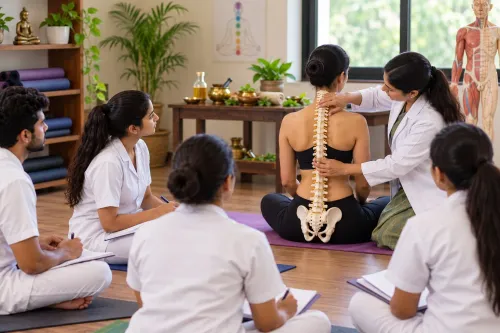
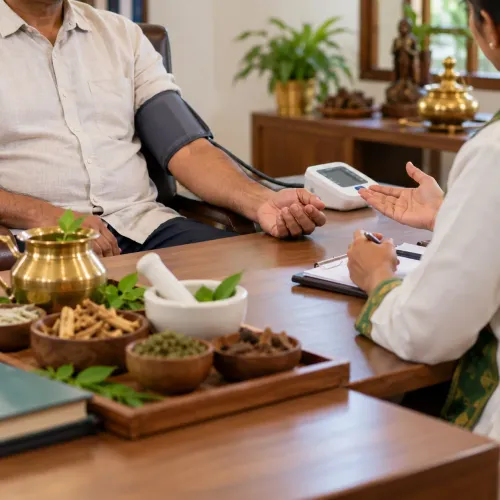
Before a client reaches the treatment table, a student can learn to combine client intake, consent, health-history recording and basic body assessment into a safe session plan. The aim is to understand the client’s concern and limits, not to diagnose disease from a tender muscle or tight area.
1. Ask about the reason for the visit, current symptoms, allergies, skin conditions, pregnancy, medicines, recent surgery, injuries and blood-clot or bleeding risks. Record the answers clearly rather than relying on memory.
2. Perform contraindication screening and identify red flags such as chest pain, severe breathlessness, fainting, sudden neurological symptoms, unexplained fever, severe abdominal pain or rapidly worsening symptoms. Stop and refer when a concern exceeds student competence.
3. Explain the procedure, oil or product, expected sensations, duration, draping and areas to be touched. Obtain informed consent, agree on pressure and touch boundaries, and tell the client how to request a pause or change.
4. Check posture, movement, swelling, skin condition and comfort through basic body assessment. Protect vulnerable areas, avoid treating broken skin, and never present palpation as proof of a medical diagnosis.
5. Record the procedure, oil used, duration, observations, reactions, advice and follow-up. During Abhyanga practice, students also learn to confirm comfort as positioning, pressure or pace changes.
This process develops communication as well as technique: a student learns to listen, explain, document and postpone treatment when safe care requires medical assessment.
What students learn to do during massage and external therapies
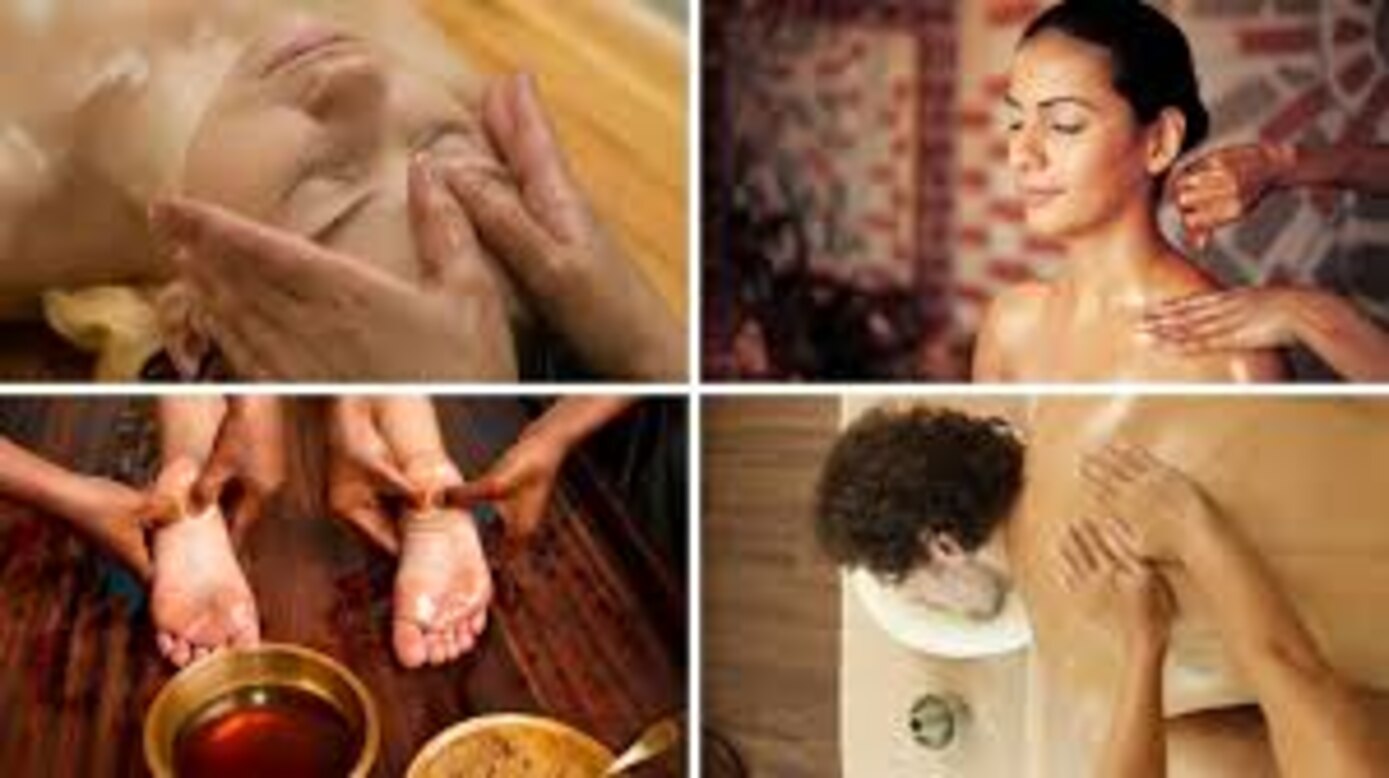
Students learn to turn a named therapy into a controlled procedure: prepare the room, warm and check the oil, position and drape the client, protect eyes and sensitive skin, and confirm comfort throughout. They adjust pressure, pace, body position and duration according to the client’s response and the supervising practitioner’s plan.
- Abhyanga oil massage: Apply coordinated strokes with steady, non-painful pressure, protect joints and other vulnerable areas, and check whether the client feels chilled, tender or uncomfortable.
- Shirodhara: Position and support the head, maintain a controlled oil stream from the dhara vessel, shield the eyes, monitor the scalp and face, and stop if the client develops discomfort, nausea or dizziness.
- Swedana: Operate the steam equipment within the approved procedure, observe skin colour and sweating, and stop for dizziness, dehydration, overheating or a burn risk. Sweating alone does not prove that the therapy has worked.
- udvartana technique: Apply the powder or paste with consistent, tolerable friction while avoiding broken, inflamed or highly sensitive skin.
- Localized oil treatments: For Kati Basti, Janu Basti, Pizhichil or another selected application, secure the treatment area, control oil temperature, prevent leakage, time the session and inspect the skin afterward.
Students also practise explaining touch, securing consent, preserving privacy and recording changes during treatment. They assist with procedures such as Basti or Nasya only within supervision; medication, fluid loss or other warning signs require stopping and referral to a qualified Ayurvedic physician. Even chest pain or fainting ends a session immediately.
How equipment, oils and treatment rooms are handled safely
Safe handling means preparing the room before the client arrives, checking equipment, and leaving every surface ready for the next session. Students learn to inspect the massage table, secure bolsters, use clean drapes and protective coverings, and keep walkways dry and uncluttered.
| Item | Practical handling skill | Safety check |
|---|---|---|
| Massage oils | Identify the prescribed oil, warm a small amount, check its temperature, and prevent contamination of the bottle | Stop if the client reports burning, itching or discomfort |
| Dhara vessel | Assemble, position and clean the vessel; control the stream without splashing the eyes or floor | Check support, flow and client comfort before continuing |
| Steam equipment | Fill, operate and cool the unit; monitor skin response during Swedana | Stop for dizziness, excessive heat, breathing difficulty or signs of a burn |
| Massage table and linens | Disinfect contact surfaces and replace all used sheets, towels and head supports | Never reuse damp or visibly soiled linen |
Hand hygiene takes place before and after each client, after contact with bodily fluids and after handling waste. Students clean and disinfect reusable equipment, separate clean supplies from used materials, seal contaminated waste, and manage oil spills promptly.
They also record the oil or product used, procedure, duration, observations, adverse reactions, advice and follow-up. That record makes the session reproducible instead of relying on a vague claim that it “detoxed” the body.
Where technician responsibility ends during Panchakarma care
A student’s responsibility ends at supervised assistance, observation and accurate reporting. They may prepare the room, position and drape the client, check consent, record vital signs, and assist with selected external therapies such as Abhyanga, Shirodhara, Pizhichil, Kati Basti, Janu Basti and localized oil applications.
Stop the procedure and alert the supervisor when you observe:
- Faintness, confusion, breathlessness, chest pain, severe nausea or unusual weakness
- Burning, blistering, marked redness, swelling or worsening pain during oil or heat therapy
- Heavy sweating with dizziness, dehydration, overheating or a sudden change in responsiveness
- Bleeding that does not stop, vomiting, aspiration risk or a client withdrawing consent
These red flags require assessment, after-care and referral rather than an attempt to complete the session. Swedana is not successful merely because the client sweats.
| Procedure or decision | What a student may do | What belongs to the qualified Ayurvedic physician |
|---|---|---|
| External therapies | Prepare equipment, control temperature, assist positioning, observe skin and comfort, document the session | Select the treatment, determine duration and assess treatment contraindications |
| Basti assistance | Prepare materials, maintain privacy, assist positioning and observe the client under direct supervision | Decide whether basti is indicated, select the formulation and route, and manage complications |
| Nasya assistance | Prepare prescribed materials, support positioning and monitor discomfort or breathing | Diagnose, prescribe the substance and dose, and decide whether nasya is safe |
| Vamana, virechana or raktamokshana | Support preparation, observation, records and escalation | Authorise, perform and medically manage these fluid-loss, aspiration, electrolyte, bleeding and infection risks |
A diploma does not authorise diagnosis, prescribing or independent invasive Panchakarma care; scope also depends on the credential and applicable state regulations.
How supervised practice proves readiness for client work
Readiness is demonstrated by observed performance with real or simulated clients, not by attendance alone. Look for supervised clinical practice in which an instructor watches intake, consent, positioning, draping, pressure adjustment, comfort checks, hygiene and safe completion of a session.
Ask each programme to show whether students maintain:
- Case logs recording the client’s concern, relevant history, screening findings, procedure, oil or product, duration, observations, after-care and referral.
- Treatment documentation detailed enough for another practitioner to understand exactly what was done, including adverse reactions and any change in consent.
- Demonstrations of Abhyanga, Shirodhara, Swedana, udvartana and any basti or nasya assistance included in the curriculum.
- A practical assessment using a marking sheet for preparation, communication, technique, privacy, equipment handling, pressure control and after-care.
- Competency checks for stopping heat treatment when skin response, dizziness, dehydration, overheating or burns appear, rather than treating sweating as proof of success.
- Scenario checks requiring students to stop and refer a client with chest pain, severe breathlessness, fainting, sudden neurological symptoms, unexplained fever or severe abdominal pain.
Ask how a student repeats a failed skill and who signs off the second attempt. Chakrapani Panchakarma Yoga Nisargopchar College is worth comparing on this point: request the actual logbook format, assessment rubric and supervisor-to-student practice arrangement, not a course title alone.
A certificate cannot authorise diagnosis or prescribing; it should document safe technician-level performance within defined limits.
Related products
 | Diploma in Panchakarma and Message Technician Diploma in Panchakarma and Message Technician A Diploma in Panchakarma and Massage Therapy, often referred to as a Panchakarma and Massage Technician course, equips individuals with the knowledge... View product → |
 | Diploma in Panchakarma Course Overview: The Panchakarma Diploma Course is designed to equip students with a deep understanding of Panchakarma principles, therapies, and... View product → |
Frequently asked questions
What does a Panchakarma student assess before treatment?
Students practise taking a health history, recording the client’s concern, obtaining consent, checking limits and planning a session without diagnosing disease.
What practical tasks do students perform during massage and external therapies?
They develop skills in client positioning, draping, oil application, massage technique, communication, observation and adapting pressure within the assigned treatment plan.
How are oils, equipment and treatment rooms handled safely?
Students learn to check labels and storage, prepare clean equipment, control room conditions, prevent slips and burns, and follow hygiene procedures before and after treatment.
When must a Panchakarma technician refer a client?
A technician must stop and refer when the client reports serious symptoms, has a condition outside the treatment plan, or raises medication or diagnostic concerns.
How does supervised practice show readiness for client work?
Supervisors observe assessment, consent, technique, hygiene, communication, documentation and response to problems before approving independent client-facing work.