A high blood-pressure reading is a clinical finding, not a diagnosis that can be confirmed by symptoms or pulse assessment alone. You will learn how to verify your readings, recognise emergencies, use Ayurveda and yoga safely as complementary care, and avoid medicine or herbal-product decisions that increase your risk.
Key takeaways
- Repeat high readings after five minutes of seated rest.
- Seek emergency help at 180/120 mmHg with chest pain or neurological symptoms.
- Use Ayurveda and yoga alongside, not instead of, prescribed hypertension treatment.
- Check every Ayurvedic product for ingredients, dosage, batch details and practitioner credentials.
What Your Blood-Pressure Reading Means—and When It Is an Emergency
An isolated high reading is a warning, not a diagnosis. Blood pressure can rise after exercise, pain, caffeine, stress or an incorrectly fitted cuff. Repeat it after resting, then record readings taken on separate occasions.
| Category | Reading | What it means |
|---|---|---|
| Elevated blood pressure | 120–129 systolic and below 80 diastolic | Above the ideal range, but not hypertension |
| Stage 1 hypertension | 130–139 systolic or 80–89 diastolic | Needs confirmation and risk assessment |
| Stage 2 hypertension | At least 140 systolic or 90 diastolic | Hypertension requiring clinical assessment |
| Hypertensive crisis | 180/120 mmHg or higher | Urgent evaluation; symptoms make it an emergency |
The World Health Organization defines adult hypertension as at least 140/90 mmHg. A diagnosis requires properly taken readings on more than one occasion; symptoms or an Ayurvedic pulse assessment alone cannot establish it.
Call emergency services immediately for a reading at or above 180/120 mmHg with:
- Chest pain or shortness of breath
- Weakness or numbness, especially on one side
- Confusion, vision changes or difficulty speaking
- A severe headache
Do not try to lower a hypertensive crisis with an Ayurvedic preparation or home remedy. If the reading remains at or above 180/120 mmHg without these symptoms, contact a clinician promptly for urgent instructions.
How to Confirm Hypertension Before Choosing a Treatment Plan
A single high reading cannot establish hypertension. Confirm it with correctly taken measurements on separate days, then bring the record to both clinicians before choosing treatment.
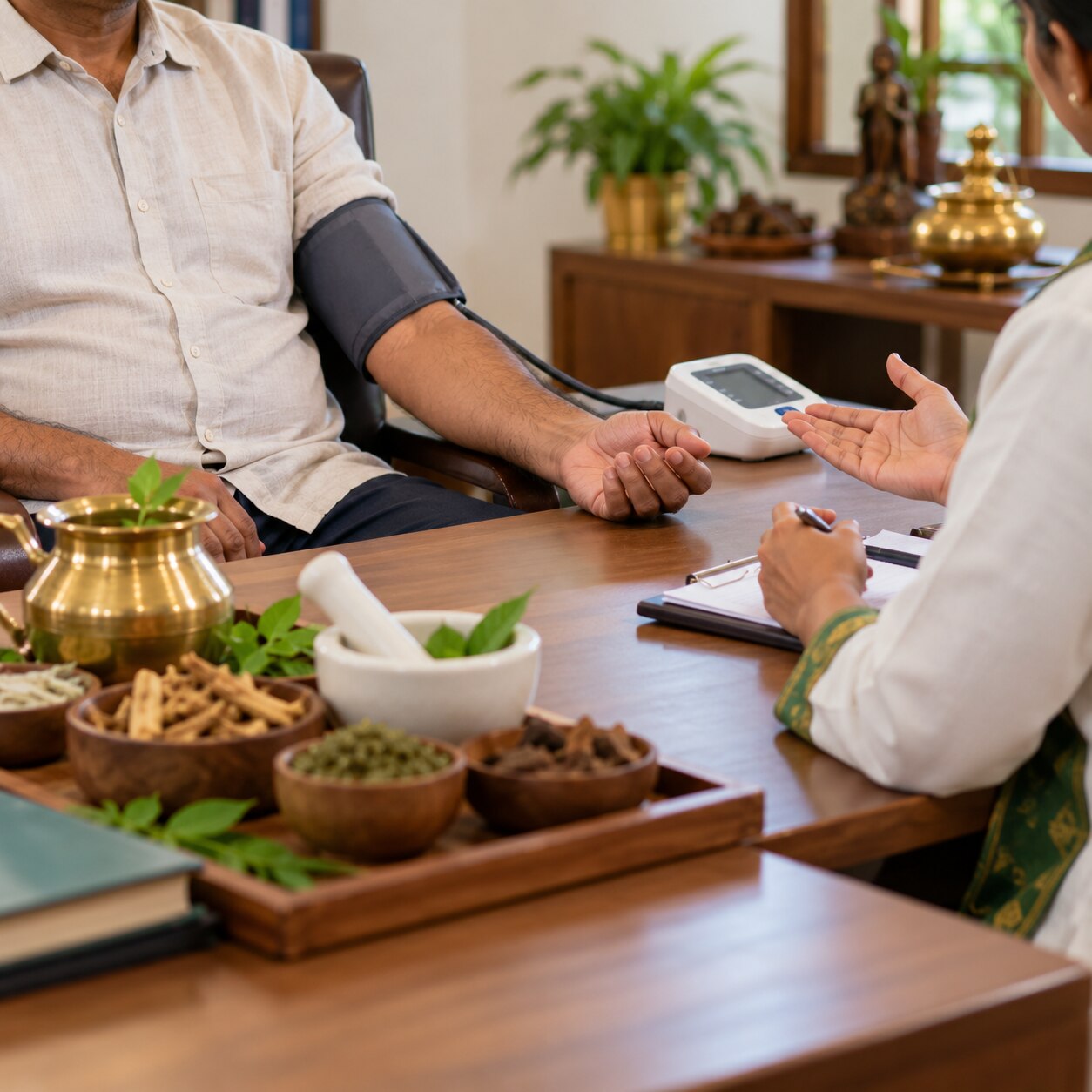
Use a validated upper-arm cuff, sized to fit your arm. Sit quietly for five minutes, keep both feet on the floor, support your arm at heart level, and do not talk. Take two readings one minute apart and record both.
| Measurement | What to do | What it tells you |
|---|---|---|
| Single reading | Repeat after one minute rather than reacting immediately | Flags a result that needs checking |
| Home series | Keep a morning and evening blood-pressure log for several days | Shows whether elevation persists |
| Clinic measurement | Share the log and repeat readings on separate visits when advised | Helps confirm the diagnosis in context |
Bring these details to the consultation:
- Every prescription, over-the-counter medicine, painkiller, decongestant, supplement, and Ayurvedic product, including its exact ingredients and dose
- Kidney disease, diabetes, pregnancy or recent pregnancy, previous stroke, heart disease, sleep problems, and family history
- Salt intake, alcohol use, tobacco, caffeine, exercise, sleep, stress, and recent illness
- Any dizziness, fainting, swelling, palpitations, or side effects after starting a product
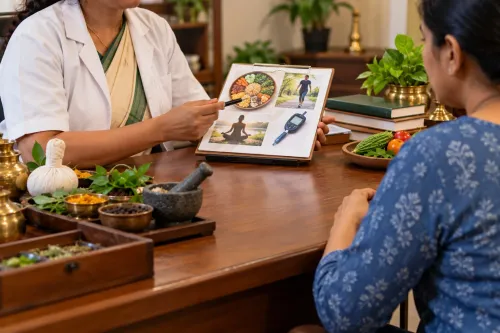
An Ayurvedic pulse assessment can contribute to Ayurvedic treatment planning, but pulse findings or symptoms alone cannot diagnose hypertension. Do not stop or reduce prescribed medicine because your readings improve; ask the prescribing clinician to review the log and make changes safely.
Where Ayurveda, Yoga and Lifestyle Changes Fit in Blood-Pressure Care
A lower reading after yoga, dietary changes, or an Ayurvedic preparation does not authorise you to stop or reduce prescribed medicine. Continue treatment and monitoring until the prescribing clinician reviews your readings; abrupt withdrawal of some drugs can trigger rebound hypertension.
Complementary care can support the factors that influence blood pressure, including stress, physical inactivity, excess dietary sodium, poor sleep, and excess weight. Its contribution is usually gradual and modest, so measure your pressure rather than judging success by how relaxed you feel.
- Practise gentle yoga, breathing, and relaxation regularly; adapt poses for dizziness, balance problems, older age, or heart disease.
- Choose a balanced eating pattern with less packaged food and sodium, unless a clinician has prescribed a different diet.
- Build activity gradually and address sleep, alcohol intake, and smoking with professional guidance.
- Record home readings and take them to both your medical and Ayurvedic consultations.
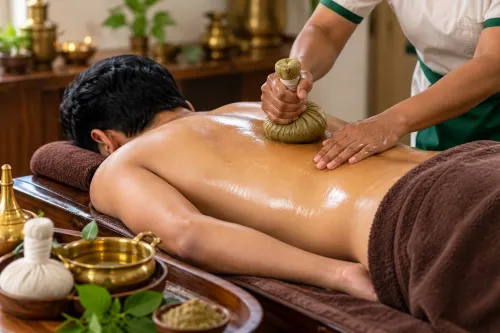
An Ayurvedic treatment for hypertension should remain an addition to proven care. Shirodhara, Panchakarma, and herbal combinations have insufficient evidence for preventing stroke, heart attack, kidney disease, or other complications. The current Panchakarma and hypertension evidence does not justify replacing antihypertensive treatment.
“Natural” is not blood-pressure neutral. Licorice can raise pressure and lower potassium, while other products can affect kidney function or drug levels. Seek individualized medical advice before fasting, using purgatives or diuretics, or adding herbs if you have kidney disease, diabetes, pregnancy-related hypertension, heart disease, or a previous stroke.
How to Coordinate Ayurvedic Care With Prescribed Medicines
Keep prescribed blood-pressure medicine unchanged when readings improve after yoga, diet changes, or an Ayurvedic preparation. Do not stop or reduce treatment yourself: abrupt withdrawal of some medicines can trigger rebound hypertension, and replacing proven treatment with herbs leaves stroke and kidney risks uncontrolled.
1. Bring a morning-and-evening blood-pressure log, every prescription and over-the-counter medicine, and each supplement to both clinicians. Record the exact Ayurvedic product name, ingredient list, dose, and frequency.
2. Ask the prescribing clinician or pharmacist to review combinations before starting them. Review amlodipine and Ayurvedic herbs together, and disclose losartan or enalapril because added potassium, kidney effects, or blood-pressure lowering can create danger. Hydrochlorothiazide and herbs marketed as diuretics can worsen dehydration or electrolyte loss.
3. Avoid products sold as “detox,” sedatives, diuretics, or replacements for antihypertensive drugs until the medical prescriber approves them. Licorice can raise blood pressure and lower potassium, while purgatives and fasting can impair hydration and kidney function.
4. Follow the agreed monitoring plan and report dizziness, fainting, muscle weakness, palpitations, swelling, or unusually low readings. Never correct a side effect by skipping the next dose; contact the prescriber for a dose change and requested blood tests, such as kidney function and potassium.
Extra caution is essential with kidney disease, diabetes, pregnancy-related hypertension, prior stroke or heart disease. A coordinated plan keeps Ayurvedic care complementary rather than substitutive.
How to Screen Ayurvedic Products and Practitioners for Safety
Ask for the product’s full ingredient list, manufacturer, batch number, expiry date and licence details before using it. Avoid unlabeled powders, products sold through informal channels, and claims that an Ayurvedic preparation can replace prescribed antihypertensive medicine.
1. Treat rasa shastra, bhasma and other herbo-mineral formulations as higher-risk products. Request a recent certificate of analysis showing lead mercury arsenic testing for the exact batch, not a general statement that the product is “purified.”
2. Give the practitioner your blood-pressure log, kidney and heart history, pregnancy status, and every prescription, over-the-counter medicine and supplement. Ask for the formulation’s exact dose and a written plan for monitoring blood pressure, kidney function and electrolytes.
3. Get medical and Ayurvedic clinicians to review products marketed as diuretics, sedatives, “detox” remedies or medicine substitutes. Do not start fasting, purgation or intensive Panchakarma if you have kidney disease, diabetes, pregnancy-related hypertension, heart disease or a previous stroke without individualized medical clearance.
4. Screen an educational service by asking whether it teaches validated upper-arm blood-pressure measurement, medicine interactions, informed consent and referral for danger signs. A pulse assessment alone cannot diagnose hypertension, and a course certificate does not qualify someone to alter your medication.
Chakrapani Panchakarma Yoga Nisargopchar College is worth assessing by these same standards: look for training that teaches safety limits, documentation and referral decisions alongside procedures, rather than presenting Panchakarma as a substitute for medical care.
Frequently asked questions
When is a high blood-pressure reading an emergency?
A reading of 180/120 mmHg or higher needs immediate repeat measurement after five minutes of rest. Seek emergency care for chest pain, shortness of breath, severe headache, confusion, weakness, numbness, vision changes or difficulty speaking.
How can you confirm hypertension before starting treatment?
Repeat measurements on separate occasions using a validated upper-arm monitor and a correctly sized cuff. Record the date, time, reading, arm used, medicines and conditions such as caffeine, exercise or stress.
Where do Ayurveda, yoga and lifestyle changes fit in hypertension care?
They can support blood-pressure control through activity, stress management, sleep, diet and weight-related changes, but they do not replace diagnosis, monitoring or prescribed medicines.
How should Ayurvedic care be coordinated with blood-pressure medicines?
Tell your doctor and Ayurvedic practitioner about every medicine, supplement and preparation you use. Do not stop or reduce prescribed treatment without medical advice, and monitor readings after any change.
How can you screen Ayurvedic products and practitioners for safety?
Ask for the practitioner’s recognised qualifications, product ingredients, manufacturer details, batch number, expiry date, dosage instructions and licence information. Avoid products with unclear contents or promises to cure hypertension.