Before you advise a client, you need more than a personal yoga practice or interest in natural health. The right training builds a working knowledge of the body, supervised practical skills, safety judgment, documentation habits and clear limits on what you are qualified to do.
Key takeaways
- Study anatomy and physiology before giving movement or wellness guidance.
- Practise client assessment and communication under qualified supervision.
- Know when symptoms require medical referral, not complementary care.
- Compare courses by supervised hours, clinical training and career scope.
The knowledge base behind responsible wellness work
Before giving yoga, naturopathy or wellness guidance, a beginner needs anatomy and physiology, not just personal experience. That foundation explains how movement, breathing, nutrition and rest affect the musculoskeletal system, respiratory system, cardiovascular system and nervous system—and where advice becomes unsafe.
1. Study body structure and function alongside biochemistry, pathology, microbiology and basic pharmacology. This helps you recognise why pain, breathlessness, infection, medication effects or sudden weakness need more than a lifestyle suggestion.
2. Learn yoga theory, including asana, pranayama, meditation, sequencing, contraindications and the difference between teaching a class and managing a clinical case. Demonstrating a posture is not the same as adapting it for pregnancy, injury or chronic illness.
3. Learn naturopathy principles, dietetics, hydrotherapy, massage and therapeutic exercise as distinct areas. Practice taking a basic health history, planning meals within your competence and recording observations rather than promising a cure.
4. Build counselling and professional-boundary skills. Chest pain, severe breathlessness, sudden neurological symptoms, unexplained weight loss, persistent high fever, severe abdominal pain, suicidal thoughts and suspected poisoning require urgent medical referral, not delayed care through yoga or naturopathy.
A short certificate can introduce these subjects, but it is not equivalent to a 5½-year BNYS course with 4½ years of study and a one-year rotating internship. Check the training level before presenting yourself as qualified for clinical wellness work.
From personal practice to supervised client skills
Personal practice proves what you can do; client preparation proves what you can notice, change, record and safely decline. A student learns to lead a safe beginner yoga class, explain asanas and pranayama, and make adaptations for limitations instead of copying a memorised sequence.
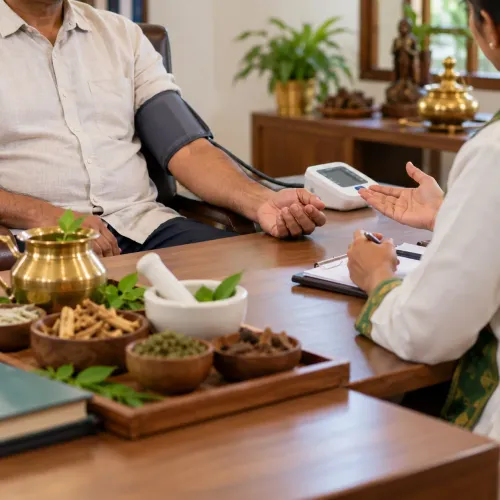
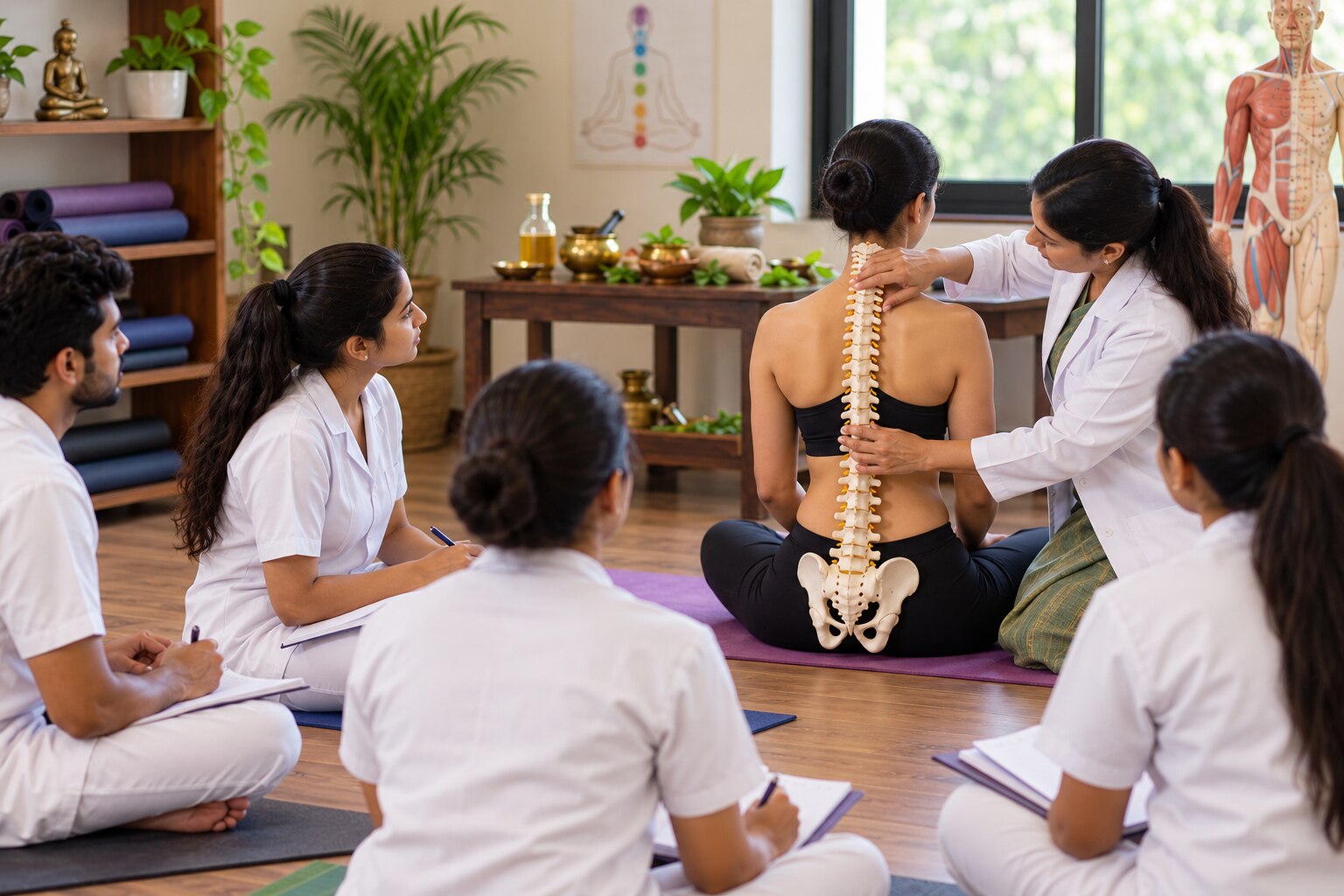
Supervised practice turns theory into repeatable work. Students take a basic health history, ask about medicines and previous injuries, observe movement and breathing, and record findings before suggesting a wellness plan. A supervisor then reviews the plan, watches delivery and checks the client’s response at follow-up.
Practical training should include:
- Screening for contraindications before stretching, breath retention, inversions, hydrotherapy or hands-on techniques.
- Adjusting intensity, range of motion and breathing for pregnancy, hypertension, vertigo, osteoporosis or an injury.
- Writing clear notes: date, client concerns, observations, advice given, consent and follow-up findings.
- Recognising chest pain, severe breathlessness, sudden neurological symptoms or suicidal thoughts as referral or emergency concerns.
Yoga teaching and yoga therapy are not interchangeable. Teaching usually develops group instruction and general wellness skills; yoga therapy requires deeper case management, individualisation and clinical supervision. A basic instructor credential does not demonstrate competence with complex health conditions.
Naturopathy training should also teach students to separate a wellness session from clinical intervention. They need practice in communication, evidence appraisal and referral, not only demonstrations of massage, Panchakarma or advanced postures. That boundary protects both client and practitioner.
Safety, assessment and the limits of complementary care
Before leading a session, students learn supervised case-taking and a basic physical examination so they can separate a wellness goal from a clinical problem. They record symptoms, medicines, allergies, pregnancy status, hydration, age and relevant comorbidities, then prepare a limited plan, document each visit and arrange follow-up.
Referral practice centres on red-flag symptoms such as:
- Chest pain or severe breathlessness
- Sudden weakness, confusion or difficulty speaking
- Persistent high fever or severe abdominal pain
- Unexplained weight loss
- Suicidal thoughts or suspected poisoning
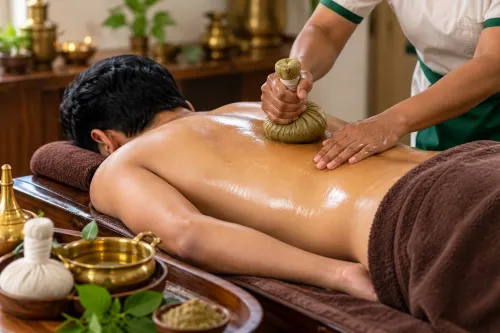
A student also learns contraindications, infection control and adverse-event recognition before assisting with massage, hydrotherapy or Panchakarma. These procedures are not automatically safe detox services; a person’s medicines, illness and physical condition can change the risk. A serious reaction requires clinical referral, not a promise that yoga, diet or naturopathy will correct it.
Informed consent means explaining the proposed activity, expected benefits, uncertainty, alternatives, cost and possible harms before starting. Accurate records protect the client and show what was actually advised. Training should also cover privacy, honest advertising and professional boundaries: do not diagnose beyond your qualification, alter prescribed treatment or delay emergency care.
Evidence literacy reinforces that a traditional-use claim, case report and controlled clinical trial do not provide the same level of support.
Using nutrition, herbs and evidence without making cure claims
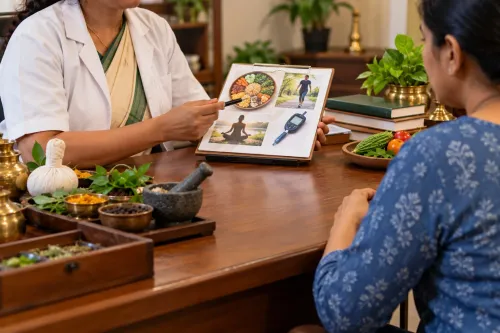
Food records help students connect symptoms, routines and intake without guessing. Clinical dietetics adds energy needs, protein, micronutrients, food safety and nutrient basics, while culturally suitable meal planning makes advice practical rather than prescriptive. Students should test whether a proposed diet fits age, pregnancy, illness, budget and eating pattern before recommending it.
Evidence appraisal requires separating:
- A plausible mechanism, which explains how an effect might occur but does not prove it.
- A case report, which describes one person without proving general benefit.
- An observational association, which can be distorted by other factors.
- A controlled clinical trial, which offers stronger evidence but still has limits.
Herbal medicine safety starts with identifying the exact plant and preparation, then checking dose, duration, pregnancy status, comorbidities, allergy and medication considerations. “Natural” does not mean harmless: an herb can alter bleeding, blood pressure, blood sugar or drug levels.
Students should document products, reconcile medicines and refer for medical or laboratory review when risk exceeds their training.
They should also recognise the danger of juice-only diets, prolonged fasting and broad elimination plans marketed as detoxification or cures. Explain expected benefits, uncertainty, alternatives and possible harms; never turn traditional use into a guarantee. A supervised plan needs consent, follow-up and referral when symptoms suggest disease rather than a wellness concern.
How to judge whether a course prepares you for your intended career
Before paying a fee, match the qualification to the work you want. A wellness certificate, yoga-instructor credential and regulated clinical degree do not grant the same professional rights. Ask the college for documents, not assurances.
1. Confirm the exact award and course duration. A BNYS is typically 5½ years: 4½ years of study plus a compulsory rotating internship of one year. Do not treat a short naturopathy certificate as equivalent clinical training.
2. Check recognition and university affiliation. For an Ayurveda programme, ask for proof of NCISM recognition and the relevant health-sciences university affiliation. “Ayurveda” in a course title alone does not establish a regulated medical qualification.
3. Inspect the clinical teaching site. Ask where students take histories, record observations, practise therapies and complete supervised clinical work. Also check faculty qualifications, student supervision and the written internship schedule.
4. Match yoga training to your intended role. Verify the level issued through the Yoga Certification Board: Yoga Protocol Instructor, Yoga Wellness Instructor, Yoga Teacher and Evaluator, or Yoga Therapist. An instructor credential does not prove competence with clinical cases.
5. Check practice rights where you will work. If you plan to work in Nagpur or elsewhere in Maharashtra, ask whether graduates need Maharashtra registration and whether this course permits diagnosis, prescribing or independent disease treatment.
When comparing Chakrapani Panchakarma Yoga Nisargopchar College with another institution, use the same document-based checklist rather than comparing course titles or promotional language. A suitable programme shows what you will be legally prepared to do after graduation—and what remains outside your scope.
Related products
 | B.Sc.- Yoga Naturopathy and Dietetics B.Sc.- Yoga Naturopathy and Dietetics B.Sc. in Yoga Naturopathy and Dietetics (or a related field like Yoga Science and Naturopathy) provides a comprehensive understanding of these... View product → |
 | Diploma Course in Naturopathy and Yogic Science ( DNYS ) Diploma Course in Naturopathy and Yogic Science ( DNYS ) The Diploma in Naturopathy and Yogic Science (DNYS) is a 1-3 year course that combines the study of naturopathy and yoga, focusing on natural healing... View product → |
Frequently asked questions
What knowledge should you gain before starting wellness work?
Build a foundation in anatomy and physiology, including the musculoskeletal, respiratory, cardiovascular and nervous systems, before advising clients.
How does supervised practice prepare you for client work?
Supervised practice develops assessment, communication, session planning and safe technique beyond what personal yoga or wellness experience provides.
When should a wellness practitioner refer a client to medical care?
Refer clients when symptoms fall outside your training, suggest an urgent condition or require diagnosis, medication or treatment by a licensed medical professional.
How can you judge whether a naturopathy or yoga course is suitable?
Check its anatomy content, supervised practical hours, assessment methods, safety training, evidence standards and alignment with your intended career.
Related products
 | Diploma Course in Naturopathy and Yogic Science Diploma Course in Naturopathy and Yogic Science A Diploma in Naturopathy and Yogic Science (DNYS) is a one or two-year diploma course that combines the study of naturopathy and yogic science. View product → |
 | M.A in Yoga M.A in Yoga An M.A. (Master of Arts) in Yoga is a two-year postgraduate degree that focuses on the fundamentals of human consciousness and yogic science. |
 | Diploma in Yoga Application To apply for a Diploma in Yoga, generally you'll need to meet specific eligibility requirements, complete an application form, and pay an application... View product → |
 | Diploma in Panchakarma Course Overview: The Panchakarma Diploma Course is designed to equip students with a deep understanding of Panchakarma principles, therapies, and... View product → |