A course title does not tell you whether students will study anatomy, practise hydrotherapy, teach yoga safely or complete supervised clinical hours. By the end, you will know what a sound diploma syllabus includes, what practical competence looks like and which questions to ask before enrolling.
Key takeaways
- Compare subject lists, practical hours and assessments before enrolling.
- Look for anatomy, physiology, yoga, naturopathy and basic clinical safety.
- Choose programmes that teach contraindications, documentation and referral decisions.
- Verify recognition, faculty qualifications, facilities and hands-on training.
Which subjects form the core syllabus?
A credible Diploma in Naturopathy and Yogic Science syllabus has two connected strands: understanding the body and applying naturopathic and yoga methods safely. Because no single curriculum governs every Indian programme, compare the written subject list, practical hours and assessment pattern rather than trusting the course title.
| Subject | Knowledge students build | Why it matters |
|---|---|---|
| Anatomy and physiology | Body systems, organs, movement and vital functions | Explains normal function and treatment limits |
| Basic pathology | Inflammation, infection, common disease processes and warning signs | Helps identify cases needing medical investigation |
| Naturopathy philosophy | Nature-cure principles, lifestyle and traditional rationale | Provides the framework for wellness planning |
| Nutrition and dietetics | Nutrients, meal planning, hydration and fasting principles | Supports individualised diet guidance |
| Hydrotherapy and mud therapy | Water applications, mud packs, preparation, timing and after-care | Builds safe procedure planning |
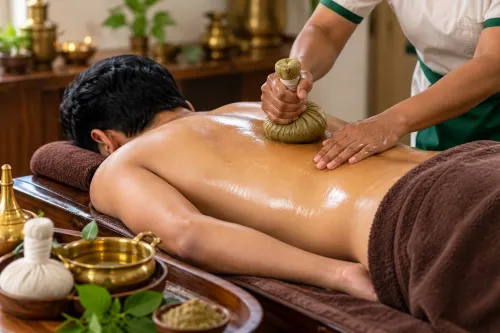
| Massage and physical therapies | Basic techniques, positioning and client response | Develops supervised hands-on skill |
| Yoga theory and teaching methodology | Sequencing, adaptation, contraindications and lesson planning | Prepares students to instruct different learners |
| Asana, pranayama, relaxation and meditation | Postures, breathing, concentration and recovery practices | Supports structured yoga sessions |
| First aid, hygiene and case-taking | Intake questions, vital signs, cleanliness and documentation | Strengthens safe client handling |
The syllabus should also teach students to separate traditional explanations from plausible mechanisms, clinical experience and controlled-trial evidence. Anatomy and physiology and basic pathology do not qualify a diploma holder to perform laboratory diagnosis, radiology or emergency medicine; they help recognise when routine naturopathy or yoga is not the right next step.
What happens in naturopathy and yoga practical sessions?
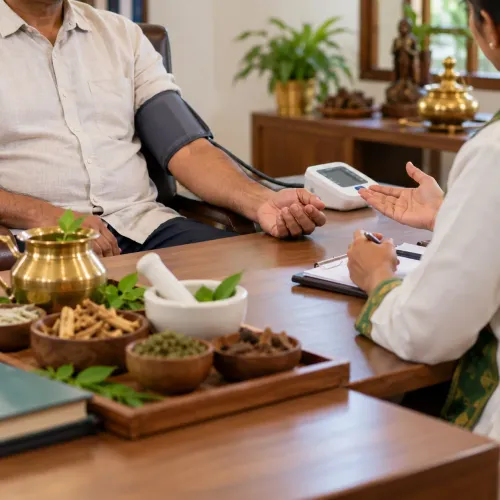
Students begin with a basic intake: the client’s reason for attending, medical history, medicines, allergies, sleep, diet, activity and current symptoms. They record pulse, blood pressure, respiratory rate, temperature and, when relevant, weight or oxygen saturation before choosing a session.
A supervised practical may include:
- A hydrotherapy practical: check water temperature, prepare the equipment, set a time limit, observe skin colour and comfort, and record the response and after-care.
- Mud therapy: prepare and apply the pack, protect sensitive areas, monitor warmth and skin reaction, then document removal and hydration.
- Massage training: practise positioning, draping, pressure, hygiene and communication while noting pain, tenderness or dizziness.
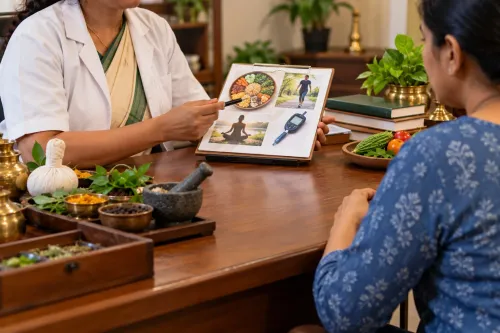
- Diet planning: build a meal schedule from the intake, food preferences and health concerns, then explain portions, fluids and follow-up changes.
- Fasting supervision: record the planned duration, baseline vitals, fluid intake and symptoms; stop the process and escalate concerns when weakness, confusion or dehydration appears.
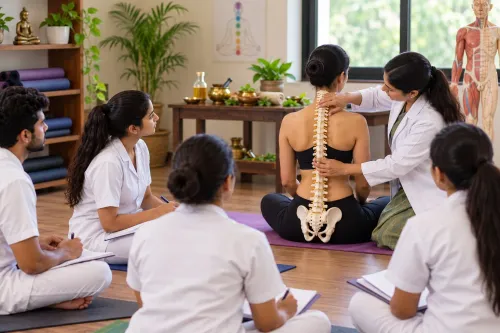
- Yoga instruction: plan asana, pranayama, relaxation or meditation for the client’s ability, demonstrate modifications, and record breathing, balance, pain and recovery.
Students evaluate whether the intervention was tolerated and whether the client’s response supports continuing, changing or stopping it. They also learn that a practical session is not a diagnosis: chest pain or severe breathlessness requires referral to a registered medical practitioner, not routine yoga or naturopathic care.
How do students learn safe practice and referral?
A safe diploma teaches students to pause before applying a technique. Informed consent means explaining the purpose, steps, expected sensations, risks, alternatives and the client’s right to stop, then recording the decision. Hygiene includes handwashing, clean linens, disinfected equipment, safe water and privacy during examination or treatment.
- Screen for pregnancy, diabetes, kidney disease, eating disorders, frailty, medication use and previous adverse reactions before recommending fasting, hydrotherapy or strenuous practice.
- Teach yoga contraindications by linking conditions to specific risks: avoid forceful pranayama during acute breathlessness, modify or defer inversions for relevant medical conditions, and stop any pose causing pain, dizziness or neurological symptoms.
- Record baseline pulse, blood pressure, temperature, breathing rate and symptoms, then reassess after the session. A worsening response requires stopping the procedure, providing first aid and escalating care.
- Keep case notes with the date, consent, observations, intervention, response and advice given. Do not claim a diagnosis from symptoms alone.
- Practise emergency recognition and action for chest pain, severe breathlessness, stroke signs, serious infection, severe dehydration, acute abdominal pain, persistent bleeding, unexplained weight loss or suicidal thoughts.
These findings require prompt naturopathy referral to a registered medical practitioner or emergency service, not routine yoga or naturopathic care. Anatomy, physiology and basic pathology help trainees recognise danger, but a diploma is not training in laboratory diagnosis, radiology or emergency medicine.
Fasting deserves the same caution: dehydration, hypoglycaemia and electrolyte disturbance can harm clients, especially those with diabetes, pregnancy, kidney disease or frailty.
How advanced is a diploma compared with other qualifications?
A DNYS diploma is broader than a yoga-teacher certificate but shallower than a B.Sc. in Yoga Naturopathy and Dietetics. It builds foundational knowledge for supervised wellness practice; it does not equal a medical degree or authorise emergency care, surgery, prescription medicines or independent disease management. Course duration, clinical hours and recognition differ between institutions.
| Qualification | Main purpose | Depth and practical exposure |
|---|---|---|
| Yoga-teacher certificate | Teach selected yoga practices | Focuses on asana, pranayama, relaxation, meditation and class instruction; anatomy and pathology are limited. |
| DNYS diploma | Combine naturopathic therapies with yoga | Covers anatomy, physiology, nutrition, hygiene, first aid, case-taking and supervised procedures, with clinical observation and case presentations where the programme provides them. |
| B.Sc. in Yoga Naturopathy and Dietetics | Provide degree-level academic and clinical preparation | Usually involves deeper theory, structured practical training, examinations, internship and more systematic laboratory or research exposure. |
| Ayurveda diploma | Introduce Ayurvedic theory and practice | Centres on concepts such as dosha, diet, lifestyle and basic therapies rather than the full depth of a degree in Ayurveda. |
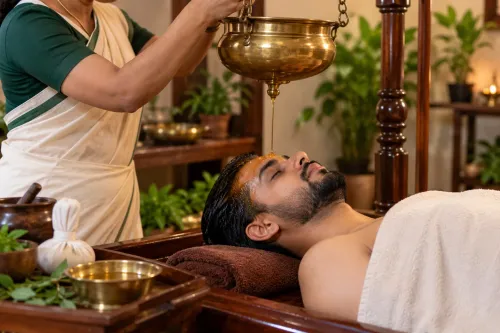
| Panchakarma diploma | Train in a narrower Ayurvedic therapy area | Concentrates on procedure preparation, equipment, observation, hygiene and aftercare; it is not equivalent to broad Ayurvedic physician training. |
Ask to see three types of evidence before enrolling:
- Laboratory work: identify whether students perform basic demonstrations or only attend lectures; a DNYS diploma is not training in laboratory diagnosis, radiology or emergency medicine.
- Clinical observation: check the number of hours, supervision arrangements and records students complete.
- Case presentations: confirm that students present intake findings, safety decisions, procedure plans and follow-up responses rather than merely submit attendance sheets.
Compare the written syllabus and awarding authority, not just the course title.
What should you verify before choosing a programme?
Request the written prospectus before paying a fee. DNYS eligibility, academic background, course duration, examination pattern, minimum attendance and compulsory clinical hours vary between institutions, so a course title alone proves little.
Check these points in writing:
- Entry: required Class 10 or 12 subjects, age limit, entrance test and documents.
- Assessment: theory papers, practical assessment, viva, case presentations and re-examination rules.
- Attendance: minimum percentage for lectures, practicals and clinical postings.
- Clinical hours: total hours, setting, logbook format and whether an internship is compulsory.
- Equipment: treatment tables, hydrotherapy facilities, mud-therapy materials, yoga mats, blood-pressure apparatus, thermometers, weighing scales and first-aid supplies.
- Supervision: named instructors, qualifications and the student-to-supervisor ratio during procedures.
Compare the promise with the evidence:
| Claim | Ask to see | Warning sign |
|---|---|---|
| Affiliation | Current affiliation letter naming the awarding body | Only a logo or verbal assurance |
| Recognition | Certificate wording and its legal or professional scope in Maharashtra | “Government approved” without an issuing authority |
| Clinical training | Timetable, attendance register and sample logbook | “Practical exposure” with no hours |
| Examinations | Recent timetable, marking scheme and sample paper | Certificate issued without assessed practical work |
Use this checklist when reviewing Chakrapani Panchakarma Yoga Nisargopchar College: ask which body awards its DNYS certificate, inspect the current syllabus and confirm where clinical hours occur. Also verify that the qualification does not claim authority to prescribe prescription medicines, perform surgery, certify medical fitness or manage emergencies.
Related product
 | Diploma Course in Naturopathy and Yogic Science Diploma Course in Naturopathy and Yogic Science A Diploma in Naturopathy and Yogic Science (DNYS) is a one or two-year diploma course that combines the study of naturopathy and yogic science. View product → |
Frequently asked questions
Which subjects form the core syllabus?
Core subjects commonly include anatomy, physiology, yoga theory and practice, naturopathy principles, nutrition, hygiene and basic health assessment. Compare the written subject list because Indian diploma curricula are not uniform.
What happens in naturopathy and yoga practical sessions?
Students practise supervised yoga instruction, breathing and relaxation techniques, basic naturopathic procedures, observation, record-keeping and client communication. Ask the institution for practical hours and the assessment method.
How do students learn safe practice and referral?
Training should cover contraindications, red-flag symptoms, informed consent, hygiene, documentation and when to refer a person to a qualified medical professional.
How advanced is a diploma compared with other qualifications?
A diploma is usually more focused and shorter than a degree, while offering more structured training than a brief certificate. Compare duration, practical exposure, entry requirements and recognition.
What should you verify before choosing a programme?
Check the written syllabus, total practical hours, assessment pattern, faculty qualifications, teaching facilities, certificate issuer, recognition claims and the programme’s rules for supervised practice.