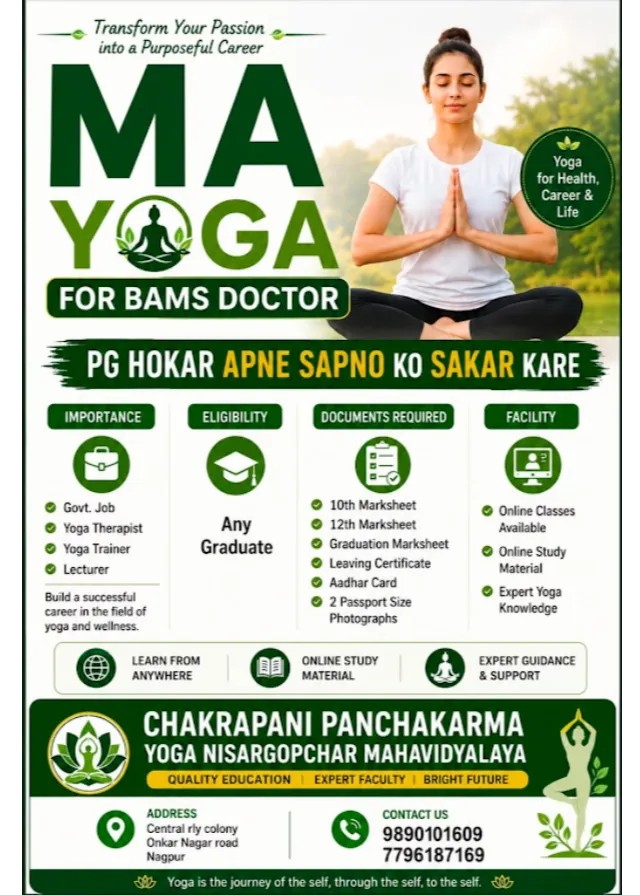
Yoga has evolved from being viewed solely as a personal wellness practice to becoming an established academic discipline with applications in education, healthcare, research, and community wellness. Pursuing an MA Yoga degree allows graduates to deepen their understanding of yogic philosophy, teaching methodologies, therapeutic concepts, and research practices. For students considering postgraduate education, this program offers an opportunity to build advanced knowledge while expanding future career possibilities.
Rather than choosing a postgraduate course based only on popularity, it is important to understand how the curriculum aligns with long-term professional goals. An MA Yoga program is generally suited to learners who wish to strengthen their academic foundation and contribute to the growing field of holistic health and wellness.
What Can Students Expect from an MA Yoga Program?
A postgraduate program in Yoga goes beyond practical asanas and introduces students to the theoretical, scientific, and philosophical aspects of the discipline.
The curriculum commonly includes:
- Advanced yogic philosophy
- Human anatomy and physiology
- Yoga psychology
- Research methodology
- Therapeutic applications of yoga
- Meditation practices
- Lifestyle management
- Teaching techniques
- Dissertation or research projects
The combination of classroom learning, practical sessions, and research encourages students to develop a comprehensive understanding of the subject.
Who Can Benefit from This Degree?
An MA Yoga may be suitable for:
- Graduates interested in postgraduate education
- Yoga instructors seeking academic qualifications
- Healthcare professionals exploring holistic wellness
- Individuals interested in research and education
- Learners planning careers in wellness institutions
Choosing a postgraduate course should depend on career aspirations, academic interests, and the opportunities the qualification can provide.
Skills Developed During the Course
Students gain several valuable professional competencies throughout the program, including:
- Advanced teaching skills
- Research and analytical abilities
- Academic writing
- Public speaking
- Leadership and communication
- Wellness programme planning
- Observation and evaluation
- Professional ethics
These skills are transferable across educational, healthcare, and wellness environments.
Career Opportunities After MA Yoga
Graduates may explore opportunities in:
- Educational institutions
- Yoga training centres
- Wellness organisations
- Research institutes
- Community health programmes
- Corporate wellness initiatives
- Rehabilitation and holistic healthcare settings
Some students also pursue doctoral studies or specialized certifications to further strengthen their academic profile.
How to Evaluate a Postgraduate Institution
Before selecting a college, students should consider:
- Faculty expertise
- Curriculum depth
- Research opportunities
- Practical training
- Academic infrastructure
- Student guidance
- Library and learning resources
- Scope for higher studies
A postgraduate programme should encourage both intellectual development and practical application.
Many students in Nagpur compare postgraduate institutions based on academic quality, practical exposure, and opportunities for research. Understanding these factors before admission helps learners choose a programme that supports their professional ambitions.
Chakrapani Panchakarma Yoga Nisargopchar College offers postgraduate education in Yoga with an emphasis on academic learning, practical training, and holistic development. The institute encourages students to combine traditional knowledge with contemporary educational practices while preparing for diverse career opportunities.
An MA Yoga degree can be an excellent next step for graduates who wish to deepen their expertise and contribute meaningfully to education, wellness, and holistic healthcare. Choosing a programme that balances theory, practice, and research provides a strong foundation for long-term professional growth.
Keywords