Persistent pain often needs more than a single technique, yet complementary care is not a substitute for diagnosing serious illness. By the end, you will know how acupuncture and acupressure differ, what a safe first visit looks like, how to judge evidence and risk, and how to fit either approach into a broader care plan.
Key takeaways
- Ask about sterile, single-use needles and practitioner training.
- Seek medical assessment for sudden, severe or unexplained pain.
- Set goals using movement, sleep and daily-function measures.
- Stop or revise treatment if symptoms worsen or function does not improve.
Needles, pressure points and the shape of a first appointment
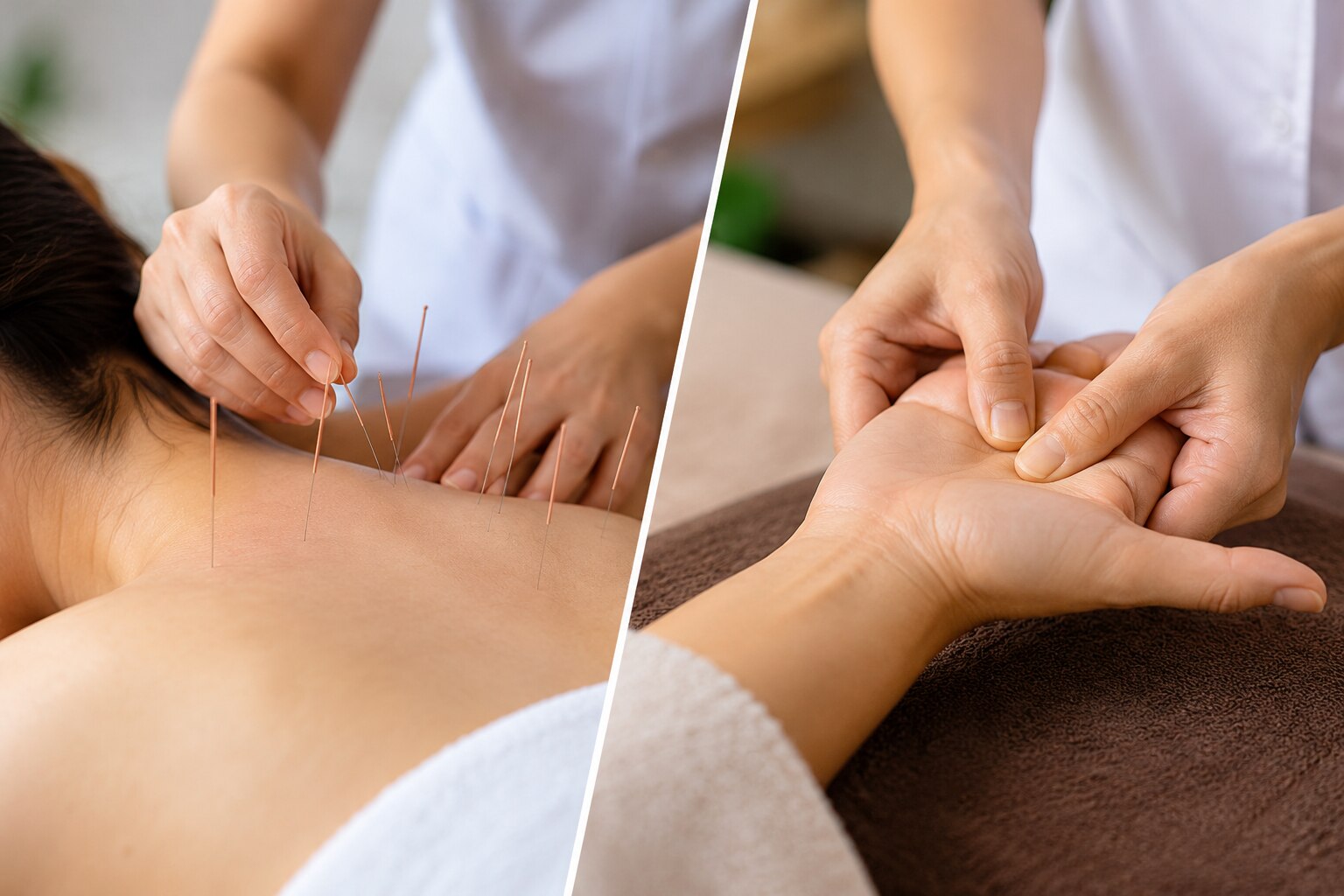
Acupuncture uses fine, sterile needles inserted through the skin; acupressure uses firm finger, thumb or tool pressure on selected points without skin penetration. Acupressure avoids needle-related risks, while evidence for broad chronic-pain claims is less established than for specific uses such as wrist P6 stimulation for nausea.
At a first acupuncture appointment, expect questions about your diagnosis, medicines, sleep, work, stress and previous treatment. Pain mapping records where symptoms start, spread and worsen. The practitioner may assess movement, posture, muscle tenderness and pulse before explaining point selection, possible sensations, session length and aftercare.
You should be able to ask about needle hygiene, consent and what improvement will be measured.
| Option | What happens | Key practical difference |
|---|---|---|
| Acupuncture | Needles stimulate selected points | Skin penetration; possible soreness, bruising or bleeding |
| Acupressure | Manual pressure stimulates selected points | No skin penetration; pressure may feel tender |
| Both | Points are chosen after assessment | Neither replaces diagnosis or rehabilitation |
Seek medical assessment before routine treatment if you have:
- New bladder or bowel-control loss, or numbness around the saddle area
- Progressive limb weakness, fever or major trauma
- Unexplained weight loss or a history of cancer
When complementary treatment fits—and when pain needs medical assessment
Acupuncture or acupressure may fit persistent, non-emergency pain after a practitioner screens for serious causes. Research shows small-to-moderate average benefits for some chronic pain conditions, but responses differ and neither treatment is a universal cure. Use them as additions to diagnosis, exercise, physiotherapy or prescribed medicine—not replacements.
| Problem | What complementary treatment may help | When medical assessment comes first |
|---|---|---|
| Myofascial pain | Muscle tenderness and tension may ease alongside movement work | Pain follows major trauma, causes weakness or keeps worsening |
| Tension headaches | Acupuncture or acupressure may reduce headache frequency or muscle tension | A sudden, severe or unfamiliar headache needs prompt assessment |
| Neck pain | Treatment may support short-term pain relief and easier movement | Numbness, progressive weakness or pain after an accident requires evaluation |
| Lower-back pain | Acupuncture may complement education, graded exercise and rehabilitation | New bladder or bowel-control loss, saddle numbness or leg weakness is urgent |
Do not proceed with routine complementary treatment before medical care if you have any of these warning signs:
- Fever with severe or rapidly worsening pain
- Unexplained weight loss
- A history of cancer with new pain
- Major trauma, such as a fall or vehicle collision
- Progressive limb weakness
- New loss of bladder or bowel control
- Numbness around the inner thighs, buttocks or genitals
Breathing, relaxation, meditation and gentle yoga can support sleep, stress regulation and coping. They do not diagnose infection, nerve compression or cancer, and forceful or poorly supervised movement can aggravate pain. A responsible practitioner refers you to primary care, physiotherapy, pain medicine or emergency services when the pattern does not fit routine complementary care.
Building a plan around movement, sleep and measurable function
A credible plan combines needle or pressure-point treatment with graded movement, sleep support and allied-health care while accepting that your pain is real. Acupuncture or acupressure may reduce symptoms enough to help you move; it should not replace assessment, physiotherapy, prescribed treatment or rehabilitation when those are needed.
Agree on measures that show whether daily function is improving:
- Walking time or distance
- Work tolerance and sitting or standing time
- Sleep duration, night waking and morning energy
- Ability to dress, climb stairs or complete household tasks
- Mood, fear of movement and stress levels
- Pain intensity, flare frequency and medication use
Yoga for chronic low-back pain can provide graded movement and self-management, but a teacher should adapt postures to your mobility, balance, pain irritability and medical conditions. Forceful stretching or unsupervised poses can aggravate symptoms. A physiotherapist can modify exercises, assess strength and movement, and coordinate progression with the practitioner providing acupuncture or acupressure.
Sleep and stress management belong in the plan because poor sleep, fear, depression, isolation and work demands can amplify disability without making pain imaginary. Set a review point, such as two to four weeks, and compare your agreed measures rather than relying on a pain score alone.
Continue only if function, sleep or another meaningful target improves; change the plan when treatment produces no useful gain or worsens symptoms.
Comparing treatment choices and checking a centre’s safety practices
Choose the option that matches your goal, diagnosis, risk and willingness to attend repeated sessions. Acupuncture or acupressure should complement rehabilitation, not delay assessment, replace indicated medication or stand in for emergency care.
| Option | Best fit | Trade-off to compare |
|---|---|---|
| Acupuncture | Point-based treatment without relying on oral medicine | Needle discomfort, bruising and infection risk; ask about sterile, single-use needles |
| Acupressure | Non-penetrating pressure and relaxation support | Results depend on technique and may not address weakness or restricted movement |
| Physiotherapy | Strength, mobility, function and rehabilitation | Requires active participation and regular practice |
| Massage | Short-term muscle relaxation and comfort | It does not correct every joint, nerve or systemic cause of pain |
| Pain medication | Broad symptom control when prescribed appropriately | Side effects, interactions and dependence risks require review |
| Injections | Targeted treatment for selected conditions | Invasive, diagnosis-dependent and not a substitute for rehabilitation |
| Supervised exercise | Progressive improvement in capacity and daily function | Benefits require consistent effort and suitable progression |
A safe centre screens for new bladder or bowel loss, saddle numbness, progressive weakness, fever, major trauma, unexplained weight loss and cancer history before treatment. It explains expected benefits, discomfort, alternatives, costs and your right to stop.
Look for hand hygiene, sterile single-use needles, an approved sharps container, clean treatment surfaces, treatment records and an adverse-event plan. Tell the practitioner about anticoagulants, bleeding disorders, pregnancy, implanted electrical devices and immune suppression.
Chakrapani Panchakarma Yoga Nisargopchar College is relevant as an educational setting only if its training demonstrates referral, consent and coordination with physiotherapy, primary care and pain medicine.
Deciding whether the treatment is helping you
Meaningful improvement means better function, not just a lower pain score. Record a baseline for seven days, then review the same measures during an agreed treatment trial:
- Pain relief on a 0–10 scale
- Sleep quality and night waking
- Walking or work tolerance
- Medication use
- Mood and ability to perform daily activities
A small score change with no functional gain may not justify continuing. Use a review date rather than continuing indefinitely, and weigh benefit against discomfort, cost, travel, and time.
Manage home care as part of self-management. Follow instructions for gentle movement, breathing, relaxation, or adapted yoga; stop an exercise that causes sharp pain, dizziness, new weakness, or a lasting flare. These practices can support coping and sleep, but they do not replace diagnosis, prescribed analgesia, surgery, or treatment for an underlying disease.
Continue if function improves and benefits last between sessions. Change the plan if progress is brief or stagnant; ask about a different technique, fewer sessions, or coordination with physiotherapy or primary care. Stop if symptoms worsen, concerning effects recur, or the agreed trial produces no meaningful benefit.
Seek medical assessment for new bladder or bowel problems, saddle numbness, progressive limb weakness, fever, major trauma, unexplained weight loss, or pain with a cancer history. Tell the practitioner about medication changes, pregnancy, bleeding disorders, anticoagulants, implanted electrical devices, or immune suppression before the next session.
Frequently asked questions
What happens during a first acupuncture or acupressure appointment?
The practitioner discusses your symptoms, health history and goals, then explains the treatment. Acupuncture uses fine sterile needles through the skin; acupressure uses finger, thumb or tool pressure without skin penetration.
When should pain receive medical assessment before complementary treatment?
Seek medical assessment for sudden or severe pain, pain after a major injury, unexplained weight loss, fever, weakness, numbness, loss of bladder or bowel control, or symptoms that are worsening.
How can you tell whether treatment is helping?
Track specific changes in pain, movement, sleep and daily activities. Continue only when the trend shows meaningful improvement without unacceptable side effects.
What safety practices should you check at an acupuncture centre?
Ask whether needles are sterile and single-use, how sharps are discarded, what training the practitioner has, and how the centre handles your medical history and consent.